Looking back on an eventful, complicated year — professionally and personally.
It’s been a strong year at StoryboardEMP, our fiesty little umbrella company for Appraiser eLearning, Appraisal Buzz, and our private investigator and agent verticals. We brought on a new partner last year at Agent eLearning. Appraiser eLearning had a record year, as did our annual appraiser conference, Valuation Expo. And thanks to the great Stephanie Mitchell, PI Education is still running as smoothly and steadily as it has done for the past 20+ years.
I never expected to be an entrepreneur. I know my mom must have quietly shaken her head at the idea of me running an education company. My grades — mostly Bs with the occasional A and C — were a constant vexation to her, all the more because she was an English teacher. In fact, she was my English teacher one year — I believe it was 7th grade. I’ll never forget her exasperation when she returned a test with a big red “F” on it … because I had misspelled my own last name.
It helped both of us to learn, much later, that I was dyslexic. And even later than that, it helped assuage my parents’ disappointment in student Hal to see adult Hal navigating the world as we dyslexics often do: head up, paying attention to our own mental maps of the world instead of relying on signage or the written word. There are benefits to this.
Still, the written word lurked, waiting for me to find my way back to it. I married a voracious reader and writer, who also happened to be a fellow pilot. In our early years together, on long flights in Kim’s Cessna 172, we read aloud to each other: The Little Prince. Heart of Darkness. Vonnegut’s essays. She reminded me of how much I’d loved stories as a kid. And then I learned the dyslexic’s secret: audiobooks and podcasts. (Check out my 2025 reading/listening list here.)
I’ve had a lot of listening time in the car over the past couple of years, driving back and forth frequently to Humboldt, the West Tennessee town where I learned to drive a tractor, worked summers packing cotton, and once shot a woodpecker off the side of our house because it was keeping me awake. (The shotgun blast also took out a big swath of T1-11 siding — another disappointment to my parents, one I couldn’t chalk up to dyslexia.)
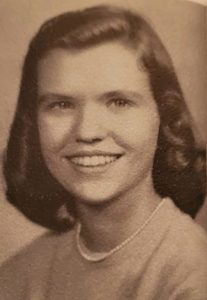 The reason for those drives: elderly parents, illness, steep decline. I knew that if I missed their final years, I’d never forgive myself. So I tried to make weekly visits, even if they were just long enough for a quick chat and a hug. And I’m so glad I did, because after a long struggle with Parkinson’s and Alzheimer’s, my dad died right before Thanksgiving of 2024. Everyone — including my mom — had been so focused on his needs, which were total, that no one realized she was also ill.
In the first week of 2026, my sister and I said goodbye to our mother, and she slipped away in her sleep. She and my dad had been married for 68 years. She outlived him by 13 months.
My mom, Julia Humphreys, loved with a ferocity that did not always present as kindness, though she always meant well. She could be generous, stubborn, tender, and inconvenient, sometimes all before breakfast. She made the best crepes and the worst coffee. The crepes were delicate and precise. The coffee, brown saline.
My dad, Tom Humphreys, was my first mentor in the real estate appraisal business. I held the dumb end of the tape for him, starting around the age of 12.
In the grand dictionary of life, where all entries eventually lead to their final definition, I find myself consulting a new word today: orphaned. One can spend five decades equipped with a father and a mother, yet be wholly unprepared for their absence. They both rest now, having finally outmaneuvered pain.
I am 57 years old and now have no parents. This seems improbable, and yet here we are.
This week I’m sorting through their things. The paperwork behaved itself. Paper always does. It knows its place. It submits to piles and labels and the clean violence of a shredder. The pottery is almost enjoyable. Bowls and mugs volunteer themselves for new lives, and everyone gets to choose what speaks to them, which feels fair, or at least merciful. Objects like that can travel light. They remember just enough and then move on.
Clothing is a different animal. Clothing remembers everything. Every sweater knows where her arms rested. Every dress recalls a dinner, a season, a version of her that existed briefly and then vanished. There is nothing here I need, which sounds simple until you realize need has very little to do with it. What I am really deciding is which memories get redistributed, which are passed down, and which are sent off to strangers who will never know why a particular jacket still smells faintly of her house, her habits, her salty coffee.
I stand there holding a blouse, and I am not choosing Goodwill or my niece or my sister. I am choosing how much of my mother the world is allowed to keep. The work is quiet and relentless. Every hanger asks a question. I answer, and answer again, and learn that grief does not announce itself with drama. Sometimes it just waits patiently in a closet and asks you to decide what to do with love after the body that wore it is gone.
So in summary, the ~14 months I’m calling “greater 2025” has been, on a personal level, a tough year. But there have also been profound joys: My business partners and several folks who work with us at Storyboard made the long drive to attend my mother’s memorial service, as did my mother-in-law and some other close friends. This meant the world to me. Other friends have come bearing homemade biscuits, books, and Thai takeout. The friend who cleans for us did an extra thorough job and left a bouquet of lilies on the kitchen counter. Scores of friends and colleagues have called, messaged, sent notes and flowers. I can never possibly thank them enough. I’m in awe of their generosity.
Grief does not announce itself with drama. Sometimes it just waits patiently in a closet and asks you to decide what to do with love after the body that wore it is gone.
I’m 57 years old, and I’m an orphan. But I’ve lived head up, noticing, and I believe that noticing has made all the difference. Kim and I have gathered a trove of beautiful, life-saving friendships, an old house full of books, and a closetful of memories. We run an education business that helps about a dozen people feed their families and (I hope) isn’t a soul-crushing place to spend 40 hours a week.
It’s true: I never cared about grades. But it turns out I do care about learning. My role at Storyboard often involves sharing things I’ve learned as an appraiser or a PI. Sometimes, it means learning about a new person by interviewing them. But mostly it’s about putting out fires — in other words, diplomacy: Soothing bruised egos. Negotiating between aggrieved parties. Speaking hard truths out loud, as gently as I can. Paying attention to what people need and want, and doing my best to supply it. It’s the dyslexic’s superpower: reading between the lines and seeing the whole picture.
And I think, in the end, my parents were proud, even though I could never be what they expected me to be. I loved them. I know for certain they loved me. And that will have to do.
Hal Humphreys is a real estate appraiser, private investigator, Pursuit Magazine editor-in-chief, and co-owner of StoryboardEMP. His essays and features have appeared in Fast Company and on Studio 360 and On the Media.