Tag Archive for: mentorship

Bryan Reynolds asks appraisers to consider a retirement phase-out plan that may benefit you, aspiring appraisers, and the community you serve.

I was teaching a live CE course recently, and a gentleman in the audience said, “This is my last rodeo. This is it.”

I said, “What do you mean?:

“I’m done after this one,” he said.

“Oh, you’re planning on retiring before your next requirement for CE,” I said. “That’s exciting, congratulations! What’s your exit strategy?”

He said, “My what?”


What’s your exit plan? Or do you have one? Are you planning to just turn off the lights off, shut the door, and say “I’m done?”

Maybe you ought to reconsider that. What if you created an exit strategy that might help you, might help others, or may just help the community in which you’re providing service?

I have this conversation a lot when I’m coaching, consulting, and teaching. I bring this up often. And I’m surprised to find that many folks have not planned for their retirement. When I say, “What’s your exit strategy,” most of the time the answer is, “Well, I’ve got a will.”

Don’t get me wrong — you need to plan for that exit strategy as well. Have you named beneficiaries? Do you have a will? It’s all about planning ahead. My mother has done a great job of planning ahead. She bought me a cemetery plot, and I said, “Thanks, Mom!” She’s got various policies so that she’ll never have to go to a nursing home. She’s got a plan of action to bring in home-care. She thought ahead and made a plan.

That’s what I’m suggesting that appraisers should do with their businesses, instead of just closing the doors. Most appraisers run small firms. They do everything themselves. They’re the president and the janitor. There’s nothing wrong with that. But instead of just closing up shop and moving to Costa Rica, what about a different plan?

Phase Yourself Out, Bring Someone In

The biggest obstacle to people getting into this profession is finding a mentor. I genuinely believe that once we’ve been in this business for awhile, if the business has been good to us, why not give back to the profession?

We need to help others. After all, someone took a chance on you, didn’t they?

Maybe we should explore this idea. Maybe you could bring someone in and start molding them. Maybe two or three someones. Yes, it’s going to take a little time. Yes, it may increase your liability a little bit. But maybe it’s an opportunity for you to say, “When I’m done, we’ll create a company for you.” Maybe you put a tail on that. I mean, how cool would it be, while you’re on the beach, to get a check once a quarter? So early on, Trainee, I’m gonna take the lion’s share of the income, and you’re not gonna make much. But eventually, you’ll make most of the money, and I’ll walk away. Like my mentor George always told me, “Bryan, you’re gonna do all the work, and I’m gonna take all the money!”

But I learned more about appraising from that gentleman than I ever learned from any book or class. There’s no way I could ever truly pay him back. Except, maybe, to pay it forward.

So maybe you bring somebody in and you mentor them. Maybe you keep a certain percentage for a few years, whatever you two negotiate. Buy you’re still a phone call away. You’re a consultant, an advisor, a mentor. Remember, the learning really starts once you’re certified. You don’t know everything you need to know once you pass that national exam and get your license issued.

We should all be lifelong learners. And when I learn something, I want to share it with others.

So instead of closing the door and moving to a warmer climate, maybe you can take a few steps and leave that door open. Maybe you set yourself up to get a residual income and help a person build a business. And you’ve helped your community by finding your replacement, someone who can carry on providing the service you’ve provided for a lifetime.

Something to think about instead of just saying, “I’m done” and closing your door.

A Parallel Strategy for Trainees

Meanwhile, for you trainees out there, or for anyone thinking about entering the profession: You need to change your approach to mentors. Don’t call and say, “I need a mentor. I need hours.” Most likely, that business owner doesn’t care what you need! I give to charity already.

But here I am in danger of contradicting myself — I do believe that we need to give back and provide opportunities for other people. But this is a two-way street: Don’t approach a supervisor saying, “I need I need I need.” Let them know what you bring to the table, what value you can add. How you can assist them in making more money.

Think of this as your onboarding strategy. Why not ask them, “How much longer are you going to be in this business? What’s your exit strategy? Maybe I can help you transition out. I’ll do the heavy lifting now, and when it’s time for you to retire to the beach, you can keep mentoring me in return for a little piece of the pie.”

Trainees, that might just be an opportunity for you to get yourself a mentor. Get an onboarding strategy. And veteran appraisers, think about your exit strategy. Both categories: Plan ahead. And maybe, on occasion, those plans can come together — to everyone’s benefit.


About the Author:

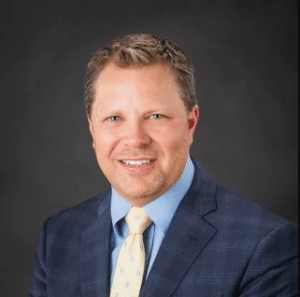
Bryan S. Reynolds, CDEI™ is a KY/TN Certified General Real Property Appraiser, a registered agent with the TN State Board of Equalization and an AQB Certified USPAP Instructor. He has testified in various courts, planning and zoning boards as both an expert and as an agent making valuation arguments before local and state hearing officials and Administrated Law Judges. Reynolds is the owner of Bryan S. Reynolds & Associates, Reynolds Appraisal Service and a partner in Appraiser eLearning. He provides residential and commercial valuation services, educational offerings, mentoring, consulting, and litigation support services throughout the country. He is available for lectures and is well known for his Think Outside the “Check” Box approach.

In “The Appraisal Update,” Bryan Reynolds asks four ACTS attendees to share their reasons for coming to the conference and their takeaways from the week. Here are a few highlights of Bryan’s questions and his interviewees’ answers, condensed and edited for clarity:

Why did you decide to attend ACTS this year?

Jason Covington, an appraiser in Nashville, TN and first-time attendee:

“The timing was right for me to go experience what everybody’s been talking about, to meet the people who’ve been doing this longer than me, people I can learn from … names you’ve heard of, people you work in and around but never have met directly. This gave me the avenue to have conversations with those people and actually see the answer to the question, ‘How do I make change? How does my voice impact my industry? How does my voice count?’”

Nakia Manning, a trainee in Atlanta, GA and first-time attendee:

“I found it was necessary for my growth as an appraiser to go out and meet other appraisers. Up until now, my only contact with the appraisal world had just been my mentor. I felt like it was essential that I join this organization so I could learn more and come to this event, For me, it wasn’t the continuing ed. It was more that I felt the need to meet other people in my profession.”

Mark Skapinetz, an appraiser in Atlanta, GA and first-time attendee:

“For me [the motivation was], meeting people I’ve been wanting to meet for a long time. Having good conversations. You are building relationships with people you can call when you have a problem. I’ve had those people. Now I’ve gained more people to go to when I have a problem, to help me solve it. That alone is worth its weight in gold.”

How was your experience?

Ken Williams, an appraiser in Jackson, MS, second-time attendee, and splendid fisherman:

“This was probably my greatest experience at an ACTS conference. This meeting was really special. Of course, catching that fish didn’t hurt things at all.

“The first conference I was a newbie and everybody was a stranger to me. But I came back with a lot of knowledge and brought it back [to Mississippi] … This time around, I knew a lot of the people. It really brought the camaraderie together. I could loosen up a little bit and freely mingle, having fun and not being offensive. Come to find out it’s hard to offend you guys. But the camaraderie, the information, is what it’s all about. I think [NAA is] a wonderful organization, it’s going to do good things. And I do know that in numbers we’re going to accomplish a lot more. And I think we have that with this association.”

Mark Skapinetz

“I loved it. I liked the setup, I liked the way it was run. I liked the topics I was there for. That mock trial, along with what Craig Capilla added in his presentation after that, hands down, was the best thing I’ve heard in so long. It was something well needed, from somebody that knows what he’s talking about. Hopefully we do another mock trial. Most people have never been in front of a board. You don’t know what you’re up against. That opened my eyes as well. Really well done.

“It was different from other conferences in the sense that it didn’t seem so robotic to me. I liked the intimacy of it. I like that everyone was getting to know each other. I’m looking forward to next year.“

Nakia Manning

“It was amazing! … As soon as I was introducing myself, the central theme was, ‘Hey, you’re a trainee. Take my information. If there is anything I can do to help you, just give me a call.’ What stood out to me about the conference? It was the family atmosphere. It was still more than just a profession. It was all love, it was all community and family. It felt like more than just work. It felt like people who were genuinely interested in my well-being as an appraiser, and my well-being as an individual as well.”

“It felt like more than just work. It felt like people who were genuinely interested in my well-being as an appraiser, and my well-being as an individual as well.” —Nakia Manning

Jason Covington

“I found myself in an environment where I felt like I mattered and my voice was heard. There were platforms where I could get involved and petition for change. It felt wonderful to be a part of something like that.”

Will you come back to future ACTS conferences?

Nakia Manning

“Indeed! I’m from South Carolina, so it will be a pleasure to go to Charleston. Hopefully I’ll be able to puff my shoulders up and actually be an appraiser, not a trainee.”

Ken Williams

“Did you have to ask that question? <laughs> Absolutely! I’m already looking forward to [the next] one.”

What would you tell other appraisers about this conference?

Nakia Manning

“If there are any trainees listening, don’t wait like I did until the end of your training period to realize the need to get out and meet other appraisers. People have different ways of arriving at their opinion, and it would help you tremendously to see things from other perspectives. It was education about what we do, but there was also education about how to run your business — not just the job itself, but how to be more effective from a business standpoint. Really great people, really good information, and the CE is just the icing on the cake.”

Jason Covington

“Take a chance. Break out of the normal routine. Take a few days to meet some people. The topics and the speakers were top-notch. Wonderful information! The information I received was incredible. Give it a try!”

Ken "Big Fish" Williams
Ken “Big Fish” Williams

About the Author:

Bryan S. Reynolds, CDEI™ is a KY/TN Certified General Real Property Appraiser, a registered agent with the TN State Board of Equalization and an AQB Certified USPAP Instructor. He has testified in various courts, planning and zoning boards as both an expert and as an agent making valuation arguments before local and state hearing officials and Administrated Law Judges. Reynolds is the owner of Bryan S. Reynolds & Associates, Reynolds Appraisal Service and a partner in Appraiser eLearning. He provides residential and commercial valuation services, educational offerings, mentoring, consulting, and litigation support services throughout the country. He is available for lectures and is well known for his Think Outside the “Check” Box approach.